

Building a “Capsule Home” is not about minimalist deprivation; it’s a financial strategy to convert your decor from a recurring expense into a portfolio of high-performing assets.
- Focus on Total Cost of Ownership (TCO) and value retention, not just the initial price tag.
- Systematically audit your current possessions to liquidate non-performing “assets” and identify gaps.
Recommendation: Begin by applying the “Packing Party” method for one weekend to perform a complete inventory reset of your home.
For many millennials, the home decor landscape feels like a trap. It’s a relentless cycle of buying trendy, inexpensive items that offer a fleeting sense of newness, only to break, fall out of fashion, or clutter our living spaces within months. This cycle doesn’t just drain our wallets; it drains our energy, creating a home that feels more like a storage unit for transient objects than a curated sanctuary. The common advice—”declutter” or “buy less”—scratches the surface but fails to address the underlying financial mechanics at play.
What if the solution wasn’t about spending less, but investing smarter? The core premise of this guide is to pivot your mindset from that of a consumer to that of a financial portfolio manager for your own home. A “Capsule Home Collection” isn’t about stark, empty rooms. It’s about a strategically selected, compact portfolio of high-quality items—or “assets”—that provide immense utility, hold their value, and deliver long-term financial returns through durability and timeless appeal. This approach transforms your home from a cost center into a source of value and stability.
This article will provide a structured, strategic framework to achieve this. We will deconstruct the true cost of “cheap” versus “quality,” analyze which assets hold their value, and provide actionable systems to audit your current inventory and automate the savings generated from this disciplined approach. It’s time to build a home that enriches your life and your balance sheet.
For those who prefer a more visual summary, the following video offers an excellent overview of the key concepts we’re about to explore, complementing the detailed strategies in this guide.
To navigate this financial approach to home curation, we’ve structured this guide to walk you through each critical stage, from calculating an item’s true cost to automating your future investments.
Summary: A Strategic Guide to Building Your Home Asset Portfolio
- The $500 Chair vs. The $50 Chair: Which Is Cheaper over 10 Years?
- Why Do We Keep Gifts We Hate? (And How to Guiltlessly Donate Them)
- Which Designer Brands Hold 80% of Their Value on the Second-Hand Market?
- Open Storage vs. Hidden Storage: Which Is Better for ADHD Brains?
- The “Packing Party” Method: How to Reset Your Home Inventory in One Weekend
- How to Distinguish a Future Classic from a 6-Month Fad?
- QR Codes for Boxes: Is It Worth Tagging Your Basement Storage?
- How to Automate Your Savings Without Triggering Overdraft Fees?
The $500 Chair vs. The $50 Chair: Which Is Cheaper over 10 Years?
The most common mistake in furnishing a home is focusing on the initial price tag. A prudent financial advisor would argue that the true cost of an asset is not its purchase price, but its Total Cost of Ownership (TCO) over its lifespan. The $50 chair seems like a victory for frugality, but it’s often a financial Trojan horse. Typically made from lower-grade materials like particleboard and held together with staples, its life expectancy is short. After two years, it may need to be replaced, costing you $250 over a decade, with zero resale value.
Conversely, a $500 chair from a reputable brand represents a capital investment. Built from solid wood with robust joinery, it’s designed to last decades. Its TCO calculation is radically different: ($500 initial price) + ($0 maintenance) – ($250 resale value) = $250. Over 10 years, both chairs cost the same, but one is a disposable expense, while the other remains a functional asset. This is why the market for high-quality furniture is so robust; Herman Miller, for instance, reported over $1.56 billion in performance seating sales in 2023, a testament to consumer demand for long-term value. Before acquiring a new home asset, performing due diligence is non-negotiable.
Your 5-Step Quality Furniture Audit
- Material Composition: Examine the piece for solid wood construction versus MDF or particleboard. Solid materials are repairable and age gracefully.
- Joinery Quality: Look for signs of craftsmanship like dovetail or mortise-and-tenon joints. Staples, glue, or visible screws are red flags for disposability.
- Brand Warranty: Verify the manufacturer’s warranty. A 10-year or lifetime warranty is a strong signal of the brand’s confidence in its product’s durability.
- Repairability: Research the availability of spare parts. Can you replace a cushion or a leg, or is the entire item a write-off if one part fails?
- Calculate TCO: Use the formula: TCO = Initial Price + (Estimated Annual Maintenance x 10 Years) – Estimated 10-Year Resale Value. This reveals the true financial impact of your purchase.
Why Do We Keep Gifts We Hate? (And How to Guiltlessly Donate Them)
Within your home portfolio, some of the most challenging assets to manage are those with high “emotional equity” but low functional or aesthetic value: unwanted gifts. We hold onto them not because we like them, but because of an emotional obligation to the giver. From a portfolio management perspective, these items are “dead assets”—they occupy valuable physical and mental space without providing a return. The key to liquidating them isn’t to ignore the guilt, but to reframe the transaction from one of disposal to one of reallocation.
The feeling of guilt stems from the fear of disrespecting the giver’s sentiment. However, the gift’s purpose—to convey affection—was fulfilled at the moment it was given. Its physical form is merely a container for that past emotion. To move forward, you must separate the object from the relationship. A practical method is to take a photo of the item. This digitally preserves the memory, allowing you to release the physical object. The goal is to curate a home filled with items that actively serve you, not a museum of past obligations.

This contemplation is a crucial step in your inventory audit. As shared by minimalist expert Julie Blanner, transforming this process into a positive act is highly effective. She reframes decluttering for her children as an opportunity to help others, noting, “They get excited to let go of their things” when it’s positioned as giving to children who have less. This strategy effectively converts the guilt of letting go into the positive emotion of generosity, allowing you to clear your inventory while strengthening community ties.
Which Designer Brands Hold 80% of Their Value on the Second-Hand Market?
Just as a stock portfolio includes “blue-chip” stocks known for their stability and long-term growth, a capsule home portfolio should include “blue-chip” furniture assets. These are pieces from iconic brands whose commitment to quality and timeless design ensures they not only last but often retain or even appreciate in value. Investing in these brands is not a splurge; it is a calculated financial decision to acquire an asset with a proven track record of high value retention on the second-hand market. While fast furniture depreciates to $0 the moment it leaves the store, a piece from a brand like Herman Miller or Knoll can often be resold for 70-85% of its original price years later.
The market for these pieces is driven by collectors, designers, and savvy consumers who understand their long-term worth. As an analysis from Top 10 Wholesale Furniture Manufacturers Report highlights, this is by design. In their report, they state:
Herman Miller’s commitment to quality ensures their furniture is built to last, offering long-term value
– ArtisanFurniture.us, Top 10 Wholesale Furniture Manufacturers Report
This commitment is the bedrock of their financial performance. The following table breaks down which categories and brands tend to be the strongest performers in your home asset portfolio, based on market analysis of the secondary furniture market.
| Category | Top Brands | Avg. Value Retention | Key Factors |
|---|---|---|---|
| Seating | Herman Miller, Knoll, Cassina | 75-85% | Iconic designs, quality materials |
| Lighting | Artemide, Flos | 70-80% | Timeless aesthetics, durability |
| Storage | USM Haller, Vitra | 65-75% | Modular systems, adaptability |
| Tables | Knoll, B&B Italia | 60-70% | Classic designs, solid construction |
Open Storage vs. Hidden Storage: Which Is Better for ADHD Brains?
The “operating system” of your home—your storage strategy—directly impacts your daily efficiency and mental clarity. For neurodivergent individuals, particularly those with ADHD, this decision is not merely aesthetic but crucial for executive function. The debate between open and hidden storage is about managing visual noise and object permanence. Hidden storage (cabinets, drawers) creates a calm, minimalist environment by reducing visual overstimulation. However, it relies on the principle of “out of sight, out of mind,” which can be a significant challenge for ADHD brains; if an item isn’t visible, it might as well not exist.
Open storage (shelves, clear bins) leverages object permanence. By keeping items visible, it provides constant reminders of what you own and where it is, reducing the mental energy required to locate things. The trade-off is potential visual clutter, which can be overwhelming. The optimal solution is not an “either/or” choice but a hybrid, zone-based system. This strategic approach assigns storage types based on an item’s frequency of use and its role in your daily routines. High-frequency items belong in plain sight, while lesser-used items are tucked away to reduce cognitive load.
A successful hybrid system includes:
- Zone 1 (High-Frequency): Daily-use items like keys, wallets, and essential tools should have a designated, visible “landing zone” near the entrance or in your primary workspace.
- Zone 2 (Medium-Frequency): Items used several times a week, like specific kitchen gadgets or hobby supplies, are best kept on open shelves but organized within clear, labeled containers to contain clutter.
- Zone 3 (Low-Frequency): Items used monthly or seasonally (e.g., formal dinnerware, holiday decorations) should be placed in closed storage to minimize visual noise. Opaque, labeled bins are perfect for this.
This turns your storage from a passive container into an active system designed to support your brain’s unique wiring, maximizing the utility value of every asset in your home.
The “Packing Party” Method: How to Reset Your Home Inventory in One Weekend
The most effective way to transition to a capsule home is to perform a complete portfolio reset. Simply tidying up or organizing is a temporary fix. A “Packing Party,” a method popularized by The Minimalists, is a radical but definitive approach to auditing every single asset you own. The premise is simple: you pack up all your belongings as if you were moving. Over the following days and weeks, you only unpack the items you truly need as you need them. It is the ultimate real-world test of an item’s utility.
This method brutally exposes the difference between what you *think* you need and what you *actually* use. The items that remain in boxes after a week, a month, or even three months are clearly non-performing assets. They contribute nothing to your daily life except the cost of storing them. This process removes the agonizing, item-by-item decision-making of traditional decluttering and replaces it with a simple, binary test of utility. Does this item provide enough value for me to seek it out and unpack it? If the answer is no, its fate is sealed: sell, donate, or recycle.
Case Study: The Permanence of Minimizing
The philosophy of the blog Becoming Minimalist provides a powerful financial framing for this method. They argue that organizing is “temporary relief,” while “minimizing is a permanent solution. Once an item has been removed from our home, the space is cleared forever.” This highlights the long-term dividend of a thorough inventory reset. The Packing Party isn’t just about getting rid of stuff; it’s about permanently eliminating the time, energy, and mental space required to manage those non-performing assets in the future.
To execute this reset, follow a structured weekend schedule:
- Friday Evening: Gather your supplies—boxes, tape, and bold markers. This is your setup phase.
- Saturday: Methodically pack everything in your home, room by room. Label boxes by general category (e.g., “Kitchen Utensils,” “Office Supplies”). Unpack only absolute essentials for the night (toothbrush, pajamas, one set of clothes).
- Sunday Onward: Live your life. When you need something—a specific pan, a book, a particular tool—find the corresponding box and unpack only that item.
- After 1-3 Weeks: Confront the boxes that remain sealed. These contain the assets ready for liquidation. Schedule a donation pickup or list high-value items for sale.
How to Distinguish a Future Classic from a 6-Month Fad?
As you begin to acquire new assets for your capsule home, the most critical skill is discerning a “future classic” from a fleeting trend. This is akin to a value investor identifying an undervalued stock with long-term growth potential versus a volatile meme stock. Fads are driven by marketing and novelty; they are visually loud but structurally weak. Classics are defined by their underlying principles: quality of materials, timelessness of form, and functional integrity.
A future classic has a quiet confidence. Its design isn’t tied to a specific year or a popular aesthetic. It often references historical design archetypes but reinterprets them with clean lines and an honest expression of its materials. Look for pieces made from solid, natural materials like wood, leather, stone, and metal. These materials age with grace, developing a patina that adds character over time, unlike plastic or particleboard which simply degrade. The form should serve its function elegantly and without unnecessary ornamentation. Ask yourself: would this piece have looked good 20 years ago? Will it still look good in 20 years? If the answer is yes, you are likely looking at a classic.
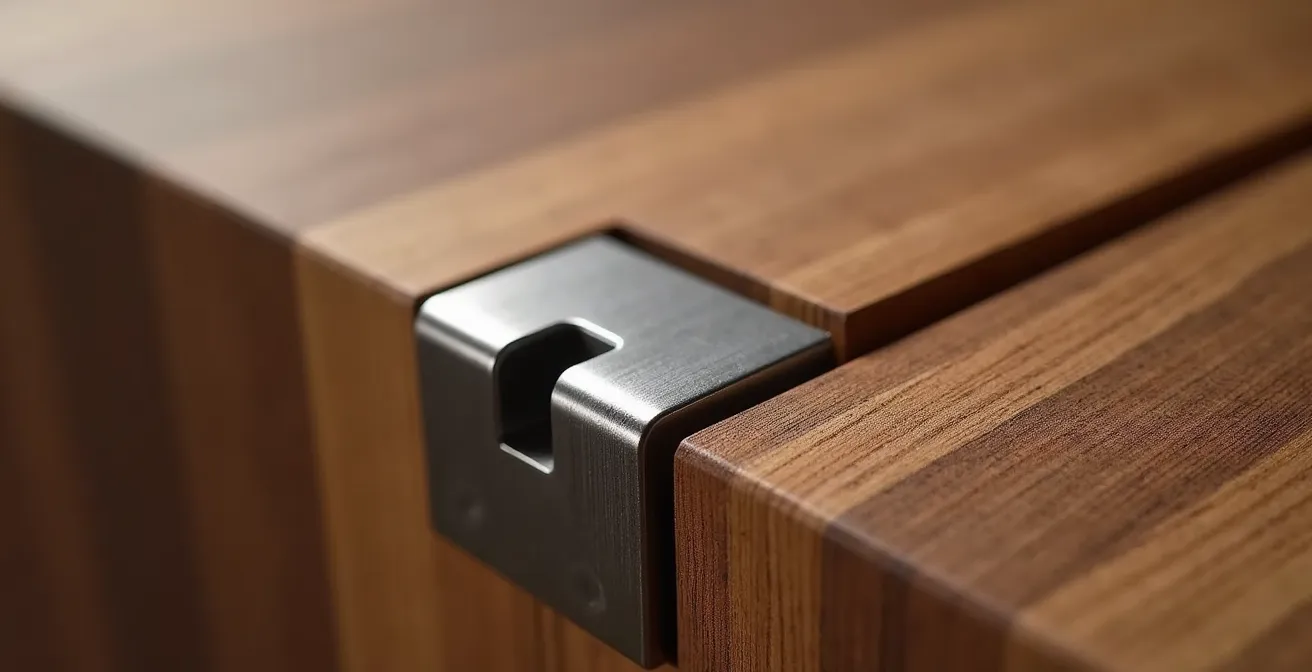
Beyond aesthetics, inspect the craftsmanship. The joints, seams, and finishes are the tell-tale signs of an item’s longevity. A well-made piece feels substantial. Its construction is logical and visible, not hidden behind veneers or cosmetic panels. A fad is designed for the photograph; a classic is designed for the hand. By training your eye and hand to recognize these markers of quality, you shift from being a passive trend follower to an active, strategic investor in your home environment.
QR Codes for Boxes: Is It Worth Tagging Your Basement Storage?
Once your capsule collection is refined, managing your “long-term hold” assets—items stored in a basement, attic, or closet—becomes the next strategic challenge. For these, a simple label is often insufficient. A digital inventory system, while seemingly complex, can provide an incredible return on investment in terms of time and peace of mind. Tagging storage boxes with QR codes linked to a database of their contents is the ultimate expression of treating your home like a well-managed warehouse.
The value proposition is clear: instead of physically opening multiple boxes to find one specific item (e.g., a specific holiday decoration or a piece of camping gear), you simply scan a code with your phone. An app instantly displays a list—or even photos—of the contents. This transforms your storage from a black hole of forgotten items into a searchable, organized archive. As a case study on maximizing space in compact capsule houses reveals, residents find that implementing decluttering techniques is vital, and using an organized system for bins and baskets is a cornerstone of this efficiency.
The decision to implement such a system is a cost-benefit analysis. For someone with only a few boxes of seasonal items, a simple, well-labeled system may suffice. But for those with significant collections, valuable items, or a need for detailed tracking (e.g., for insurance purposes), a digital system is a powerful tool. The setup time is a one-time investment that pays dividends every time you need to retrieve something from storage.
Before committing, it’s wise to compare the available systems to find the one that best suits your portfolio of stored assets.
| System Type | Setup Time | Cost | Features | Best For |
|---|---|---|---|---|
| QR Code + App (Sortly) | 2-3 hours | $9-39/month | Photos, warranties, search | Large inventories |
| Simple Labels | 30 minutes | $10 one-time | Visual identification only | Small collections |
| Spreadsheet + Photos | 1-2 hours | Free | Detailed tracking, manual update | Tech-savvy minimalists |
| Color-Coded System | 1 hour | $20 one-time | Quick visual sorting | Seasonal storage |
Key takeaways
- Shift your mindset from consumer to portfolio manager, focusing on an item’s Total Cost of Ownership (TCO).
- Systematically audit all possessions to liquidate “dead assets” (like unwanted gifts) and identify core, high-utility items.
- Invest in “blue-chip” assets—pieces with proven value retention—and develop systems to manage your entire home inventory efficiently.
How to Automate Your Savings Without Triggering Overdraft Fees?
The financial discipline of building a capsule home yields a tangible dividend: money saved from avoiding impulsive, low-quality purchases. The final step in this strategy is to create a system that automatically captures and reinvests these savings. A “Future Classic Fund” is a dedicated savings account earmarked for future high-value acquisitions. The challenge is automating transfers to this fund without risking overdraft fees on your primary checking account.
A simple “transfer $100 every Friday” rule is too rigid and can fail during a tight month. The solution is an intelligent, threshold-based automation system. This “waterfall” approach ensures you only save what you can truly afford, making the system resilient and stress-free. Most modern banking apps allow you to set up rules that trigger actions based on your account balance. This is the mechanism you will leverage to build your fund effortlessly.
The process works as follows:
- Set a Low-Balance Alert: In your checking account, establish a comfortable minimum balance threshold (e.g., $1,000). Configure your banking app to pause all automatic savings transfers if the balance drops below this amount. This is your safety net.
- Create the “Future Classic Fund”: Open a new high-yield savings account. Give it an inspiring name that reinforces its purpose.
- Establish a Sweep Rule: Create a weekly or bi-weekly rule to automatically “sweep” any amount above a certain ceiling (e.g., $2,500) from your checking account into your fund. This captures surplus cash without touching your core operating funds.
- Track Avoided Purchases: When you consciously decide against a frivolous $50 purchase, manually transfer that exact amount into your fund. This reinforces the positive financial behavior.
- Review and Adjust: Once a month, review your transfer patterns and adjust your thresholds as needed. As your spending becomes more intentional, you may be able to set more aggressive savings rules.
This automated system turns prudent lifestyle choices into a powerful engine for building long-term wealth, one classic piece of furniture at a time.
By reframing your relationship with the items in your home from one of temporary consumption to one of long-term investment, you unlock not just financial savings, but a profound sense of clarity and control. Your home becomes a direct reflection of your values and a stable foundation for your financial future. To begin this transformation, the next logical step is to conduct a thorough analysis of your current assets and liabilities to create a strategic acquisition plan.