

The pursuit of “zero waste” perfection is the biggest obstacle to a sustainable lifestyle, especially for busy parents.
- Chasing an impossible ideal leads to decision fatigue, guilt, and eventually, giving up entirely.
- Focusing on “low waste” solutions for common household friction points creates lasting habits and a greater real-world impact.
Recommendation: Instead of trying to do everything perfectly, choose one or two “good enough” solutions from this guide and master them. Progress, not perfection, is the key.
You’ve seen the images: a single mason jar holding a year’s worth of trash, a perfectly organized pantry with zero plastic, a family that seems to effortlessly live in harmony with the planet. And as a busy parent, a wave of guilt washes over you as you toss another plastic-wrapped snack into the lunchbox. This feeling—the gap between the zero-waste ideal and your daily reality—is what I call the perfectionism trap. It’s the voice that says if you can’t do it all, you might as well do nothing.
Most advice focuses on simple swaps like reusable bags or coffee cups, but it often ignores the real friction points of family life. What do you do with smelly athletic gear? How do you compost in a small apartment without attracting pests? These are the frustrating, unglamorous challenges where good intentions die. We’re told to make everything from scratch or perform complex trash audits, which only adds to the decision fatigue you already face every single day.
But what if the goal wasn’t perfection? What if “low waste” living—a pragmatic, flexible approach—is actually more sustainable for both you and the planet? The truth is, a million families imperfectly reducing their waste has a far greater impact than a few hundred living a perfect zero-waste life. This isn’t about sacrificing your sanity for an ideal; it’s about reclaiming your power by making small, consistent changes that stick.
This guide is designed to dismantle that perfectionism trap. We will tackle the most common and frustrating sustainability hurdles one by one, offering realistic, “good enough” solutions. We’ll explore why some eco-swaps fail and provide the practical fixes to make them work for you, proving that imperfect progress is the most powerful tool you have.
To help you navigate these common challenges, this article breaks down practical solutions for different areas of your home. You’ll find concrete answers to the questions that often stop sustainable efforts in their tracks, allowing you to move forward with confidence instead of guilt.
Summary: Beating the Perfectionism Trap in Your Home
- Composting in an Apartment: How to Do It Without Smells or Fruit Flies?
- Cold Wash vs. Hot Wash: Does It Really Clean Gym Clothes?
- Shampoo Bars: Why Do They Make Your Hair Waxy (And How to Fix It)?
- Phantom Load: How Much Is Your Gaming Console Costing You in Standby Mode?
- Thrift Store Furniture: How to Disinfect Upholstery to Avoid Bed Bugs?
- The Hidden Environmental Cost of “Fast Decor” Items You Buy Online
- Rain Gardens: How to Filter Runoff Water Before It Hits the Sewer?
- Greywater Systems: Is It Legal to Reuse Bath Water for Your Garden?
Composting in an Apartment: How to Do It Without Smells or Fruit Flies?
The idea of composting in a small living space often triggers fears of foul odors and pest invasions, making it a prime example of the perfectionism trap. If it can’t be a pristine, odorless process, why bother? The reality is that urban composting is not only possible but increasingly common. In fact, a market analysis reveals that over 48% of household composters sold in 2024 are compact, sub-20-liter models designed specifically for smaller homes. The key isn’t a perfect system, but the right one for your space and effort level.
The number one enemy is anaerobic decomposition—rot that occurs without oxygen, creating that dreaded smell. The simple fix is a balanced mix of “greens” (food scraps) and “browns” (carbon-rich materials like torn paper, coffee filters, or dry leaves). Aim for a 50/50 ratio to keep the system aerated and happy. But the most transformative tip for apartment dwellers is the freezer trick: keep a large, sealed bag or container in your freezer for food scraps. This completely halts decomposition, eliminating smells and fruit fly eggs before they even enter your compost bin. You can then transport the frozen scraps to a community drop-off or your own bin at your convenience.
For those ready to manage a bin at home, several options exist beyond traditional piles. Each offers a different balance of cost, effort, and speed, proving there’s no single “best” method.
| Method | Cost | Processing Time | Odor Control | Space Required |
|---|---|---|---|---|
| Lomi Electric Composter | $300-500 | Few hours | Excellent | 16″ width x 12″ height |
| Vermicomposting | $50-150 | 2-3 months | Good with proper management | 2-3 sq ft |
| Bokashi Fermentation | $60-100 | 2-4 weeks | Good (sealed system) | 1-2 sq ft |
| Freezer Collection | Free | N/A (drop-off required) | Excellent | Freezer space only |
Choosing a method like freezer collection is a perfect example of imperfect progress. You’re still diverting food waste from landfills without the pressure of maintaining a complex ecosystem in your kitchen. It’s a pragmatic first step that makes a real difference.
Cold Wash vs. Hot Wash: Does It Really Clean Gym Clothes?
That persistent funk on synthetic gym clothes is a major sustainability friction point. The default solution is to blast them with a hot water cycle, erasing any energy savings and contributing to fabric breakdown. This “all or nothing” approach stems from the belief that cold water simply doesn’t work. However, modern laundry science tells a different story. The key isn’t the temperature, but the detergent.
Most of the energy used in a wash cycle—around 90%—goes toward heating the water. Switching from a warm to a cold cycle can save a significant amount of energy. One analysis calculated 3.2 kilowatt hours saved per load when making the switch. Over a year, that’s a substantial reduction in your home’s carbon footprint. But savings are meaningless if your clothes don’t get clean. The breakthrough lies in enzymatic detergents. These formulas are specifically designed with enzymes that are most active in cold water, effectively targeting and breaking down the sweat, oils, and bacteria that cause odors in synthetic fabrics.
For truly stubborn buildup, you may need an occasional “reset” rather than a permanent switch to hot water. A process called laundry stripping can remove deep-set residues from minerals and old detergent, restoring your athletic wear’s performance and cleanliness. This deep clean is a perfect visual of what gets trapped in the fibers.
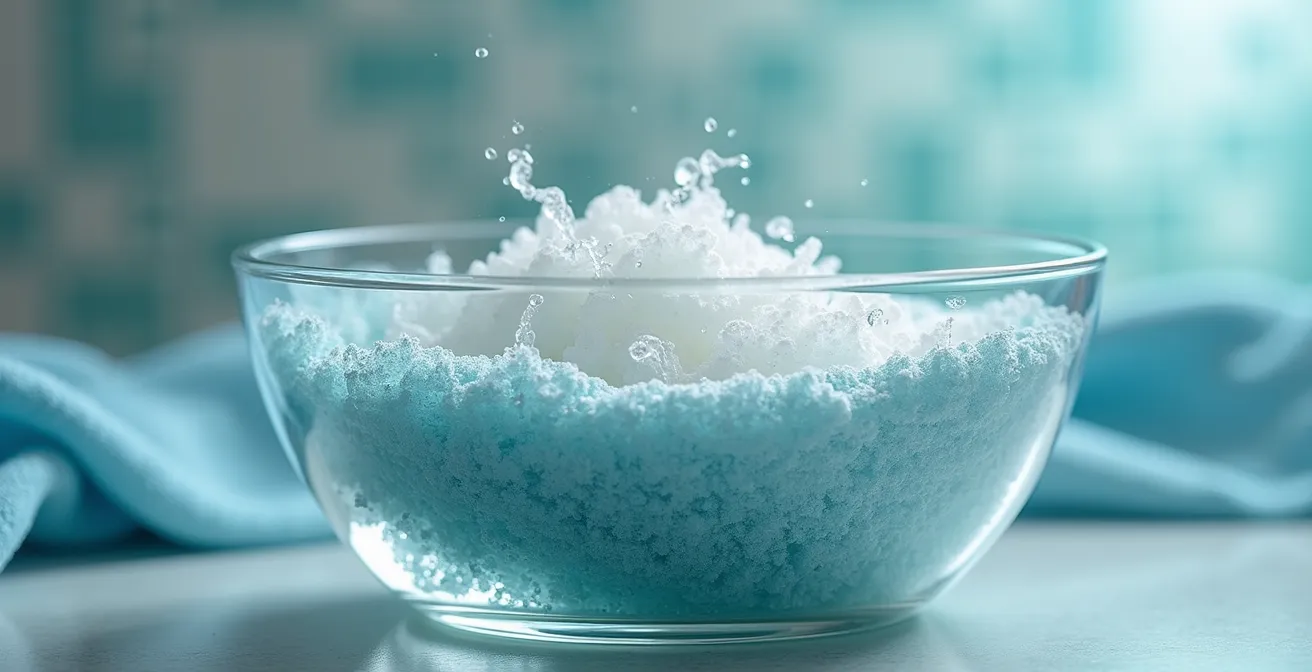
As the image shows, stripping visibly releases trapped grime that regular washing leaves behind. However, this is a targeted treatment, not a weekly necessity. For daily cleaning, a good enzymatic detergent and a cold cycle are more than enough. The pragmatic approach is clear: use cold water for 95% of your washes and reserve targeted treatments like stripping for when they’re truly needed, rather than defaulting to energy-intensive hot water for every load.
Shampoo Bars: Why Do They Make Your Hair Waxy (And How to Fix It)?
The shampoo bar is the poster child for plastic-free swaps, but for many, the experience is a disaster. Instead of clean, bouncy hair, they’re left with a waxy, greasy, or sticky residue. This frustrating result leads many to declare the entire category a failure and return to plastic bottles, feeling defeated. The problem isn’t the concept; it’s that not all shampoo bars are created equal. The waxy feeling is a chemistry problem, not a personal failure.
The issue often boils down to the difference between a soap-based bar and a syndet bar. A true soap-based bar reacts with the minerals in hard water to create soap scum—the exact same residue you might find on your shower door. This scum binds to your hair, causing that dreaded waxy buildup. In contrast, a syndet (synthetic detergent) bar is essentially liquid shampoo with the water removed. As a guide to navigating hard water explains, syndet bars use the same gentle cleansing agents as bottled shampoos, which are formulated to rinse clean without reacting to minerals. For most people, especially those with hard water, switching to a syndet bar will solve the problem instantly, with little to no “transition period.”
If you have a soap-based bar and want to make it work, the fix is an acidic rinse. This helps to break down the mineral and soap residue. An apple cider vinegar (ACV) rinse is a simple and effective solution. Just mix one part ACV with three parts water, pour it over your hair after shampooing, let it sit for a few minutes, and then rinse thoroughly. Here’s how to adjust for your hair type:
- For fine hair: Use 1 tablespoon of ACV per 1 cup of water.
- For thick or coarse hair: Use 2-3 tablespoons of ACV per 1 cup of water.
- Alternative: If you dislike the smell of vinegar, dissolve 1/4 teaspoon of citric acid in a cup of water for a similar effect.
Be aware that this may not be suitable for color-treated hair, as the acidity could strip the color. By understanding the chemistry, you can diagnose the problem and find a real solution instead of giving up.
Phantom Load: How Much Is Your Gaming Console Costing You in Standby Mode?
In a busy household, convenience is king. Features like “Instant-On” for gaming consoles, which allow for quick startups and background downloads, seem like a non-negotiable. But this convenience comes at a hidden environmental and financial cost known as phantom load or vampire power—the energy a device consumes even when it’s turned “off.” Trying to eliminate every single source of phantom load is a perfect recipe for frustration, but tackling the biggest offenders, like gaming consoles, offers a significant win with minimal effort.
Modern consoles are powerful computers, and their standby modes can consume a surprising amount of electricity. The difference between a true energy-saving mode and a convenience-focused “instant-on” mode can be dramatic. For example, an Xbox Series X in “Instant-On” mode can cost over 20 times more per year in standby power than in its “Energy Saving” mode. While a few dollars a year may not seem like much, this adds up across millions of households and represents energy that is essentially wasted.
The following table from an analysis on home energy use by the U.S. Department of Energy breaks down the annual cost of convenience for popular consoles, assuming an electricity price of $0.17/kWh.
| Console | Standby Power (Watts) | Annual Cost (Standby) | Instant-On Enabled |
|---|---|---|---|
| PlayStation 5 | 1.5W (Rest Mode Off) | $2.60 | No |
| PlayStation 5 | 4W (Rest Mode On) | $7.00 | Yes |
| Xbox Series X | 0.5W (Energy Saving) | $0.90 | No |
| Xbox Series X | 13W (Instant-On) | $22.80 | Yes |
| Nintendo Switch | 0.5W (Docked, Sleep) | $0.90 | N/A |
The pragmatic solution isn’t to unplug the console after every use—that’s unrealistic. Instead, the first step is simply to navigate to your console’s settings and switch from “Instant-On” to “Energy Saving” mode. For an even more automated approach, a smart plug can be programmed to completely cut power to your entertainment center during overnight hours (e.g., from 2 AM to 8 AM), eliminating all phantom load without requiring any daily action.
Thrift Store Furniture: How to Disinfect Upholstery to Avoid Bed Bugs?
Choosing second-hand furniture is a fantastic way to reduce waste and avoid the environmental impact of “fast decor.” However, the fear of bringing home pests like bed bugs is a powerful deterrent that can push people back to buying new. The perfectionist mindset demands a 100% guarantee of safety, which is impossible. The pragmatic approach, however, involves a simple, methodical protocol that dramatically reduces the risk and gives you the confidence to embrace second-hand treasures.
The most effective, non-chemical weapon against bed bugs is heat. According to experts cited by sources like Consumer Reports, bed bugs and their eggs die when exposed to temperatures above 120°F (50°C). While professional exterminators use powerful equipment, you can rent a commercial-grade fabric steamer for a day. The key is to be methodical: move the steamer nozzle slowly (about one inch per second) across every single surface, paying special attention to seams, tufts, crevices, and the underside of the furniture, where pests are most likely to hide. This focused application of heat is far more effective than a simple surface spray.
Before bringing any piece inside, a quarantine and inspection period is your best line of defense. This doesn’t have to be complicated. It’s a structured process of observation and targeted action that allows you to identify any issues before they become a household problem. A systematic approach turns fear into a manageable checklist.
Your 5-Step Audit for Second-Hand Finds
- Quarantine & Isolate: Upon arrival, place the furniture in an isolated area for at least a week (e.g., a garage, a sealed-off room, or a covered outdoor space). Do not bring it into your main living areas.
- Initial Inspection: Use a bright flashlight to thoroughly inspect every inch of the item. Look for tell-tale signs: tiny dark spots (fecal matter), small reddish stains (crushed bugs), or translucent shells (molted skins).
- Targeted Treatment: If you find any suspicious signs, use a handheld steamer on all seams, crevices, and upholstery surfaces. The high heat is the most effective DIY method for killing potential pests and their eggs.
- Mid-Quarantine Check: Halfway through the quarantine period, perform another detailed inspection. This gives time for any hidden eggs to potentially hatch, making them more visible.
- Final Clearance: Before moving the furniture inside, place a clean white sheet under and around it overnight. Check the sheet in the morning for any signs of activity. If it’s clear, you’re good to go.
This protocol doesn’t offer an iron-clad guarantee, but it replaces vague anxiety with a concrete action plan, empowering you to make sustainable choices with confidence.
The Hidden Environmental Cost of “Fast Decor” Items You Buy Online
The allure of trendy, inexpensive home decor from online marketplaces is hard to resist. With a few clicks, you can refresh your space for the cost of a takeout dinner. But this “fast decor” trend has a dark side, mirroring the environmental problems of fast fashion. It encourages a cycle of rapid consumption and disposal, and its true cost is hidden in complex supply chains and wasteful logistics. The perfectionism trap here is believing you need to have a home that looks like a pristine magazine cover, updated every season.
One of the most shocking hidden costs is in the returns process. When that trendy vase or cushion doesn’t look quite right, you might assume it gets resold. However, industry analysis shows that for many third-party sellers, it is cheaper to send returned items directly to a landfill than to inspect, repackage, and restock them. Some estimates suggest 30-40% of online decor returns are simply thrown away. Your “free and easy” return might just be a one-way ticket to the dump.
The pragmatic alternative is to shift your mindset from initial cost to “cost per use.” An investment piece from a local artisan might seem expensive upfront, but its durability and timeless design mean its cost, spread over years of enjoyment, is often far lower than a cheap item that needs to be replaced annually.

Thinking in terms of longevity reframes the entire purchasing decision. This isn’t about having a bare, minimalist home; it’s about choosing items with intention and investing in quality that lasts.
| Item Type | Initial Cost | Expected Lifespan | Uses (Weekly) | Cost Per Use | Carbon Footprint |
|---|---|---|---|---|---|
| Fast Decor Cushion | $20 | 6 months | 26 uses | $0.77 | High (shipped internationally) |
| Artisan Cushion | $100 | 10 years | 520 uses | $0.19 | Low (local production) |
| Trendy Pampas Grass | $35 | 1 year | 52 uses | $0.67 | Very High (chemically treated) |
| Local Dried Flowers | $45 | 3 years | 156 uses | $0.29 | Minimal |
This table makes the financial case for slow decor. The next time you’re tempted by a trendy online bargain, ask yourself: “Will I love this in five years?” If the answer is no, it’s probably not worth its true environmental price.
Rain Gardens: How to Filter Runoff Water Before It Hits the Sewer?
For homeowners with a yard, managing rainwater can feel like a complex engineering problem. During a heavy storm, water sheets off the roof and driveway, carrying pollutants like oil, pesticides, and heavy metals directly into the storm sewer and, eventually, into local waterways. The idea of installing a complex drainage system is overwhelming. However, a rain garden is a beautiful, low-tech solution that works with nature, not against it. It’s a perfect example of how a small, targeted intervention can have a significant ecological benefit.
A rain garden is simply a shallow, planted depression designed to temporarily hold and soak in rainwater runoff from roofs, driveways, or lawns. It’s not a pond; it’s a garden that’s designed to drain within 24-48 hours, preventing mosquito problems. The magic lies in the soil and the plants. The garden is filled with a porous soil mix that allows water to filter through it slowly. As the water percolates down, the soil and plant roots work together to filter out pollutants.
The real power of a rain garden comes from using native plants in a process called phytoremediation. This is the science of using living plants to clean up soil, air, and water. Certain native plants are superstars at this job. Research shows that plants like:
- Switchgrass (Panicum virgatum): excels at absorbing and storing heavy metals like lead and cadmium.
- Black-eyed Susans (Rudbeckia): have root systems that help break down petroleum hydrocarbons from driveway runoff.
- Native Sedges (Carex species): are incredibly effective at filtering out excess nitrogen and phosphorus from lawn fertilizers.
- Swamp Milkweed (Asclepias incarnata): thrives in the wet conditions of a rain garden while also providing critical habitat for monarch butterfly caterpillars.
By choosing the right native plants for your region, you’re not just creating a garden; you’re deploying a tiny, self-sustaining water treatment facility in your own yard. It’s a beautiful way to take personal responsibility for the water leaving your property, turning a problem (runoff) into a resource that supports local ecology.
Key takeaways
- The “all or nothing” zero-waste mindset is a trap; focus on “low waste” and imperfect progress.
- Common eco-frustrations (waxy shampoo, smelly compost) often have simple, science-based fixes.
- Choosing “good enough” solutions that fit your lifestyle is more sustainable than chasing an unrealistic ideal.
Greywater Systems: Is It Legal to Reuse Bath Water for Your Garden?
The idea of reusing water from your shower, bath, or laundry machine—known as greywater—to irrigate your garden is the epitome of a closed-loop, sustainable practice. It seems like a simple, common-sense way to conserve a precious resource. However, the question “Is it legal?” is a major hurdle that stops many people. The fear of navigating complex permits or breaking an unknown local ordinance can be paralyzing. The truth is, the answer varies dramatically by location, but simple, permit-free options often exist.
Greywater regulations are a patchwork of local and state codes. Some regions have no rules, while others require professionally engineered systems. However, a growing number of areas, particularly in drought-prone regions, have created exemptions for simple systems. The most common is the “laundry-to-landscape” (L2L) system. This approach diverts rinse water from your washing machine directly to your garden via a hose, without any holding tank. Because it doesn’t store the water, the health risks are minimal, and many jurisdictions allow it without a permit as long as daily discharge is below a certain volume.
Understanding your regional category is the first step to moving forward without fear. Here’s a general overview of how greywater is regulated:
| Regulation Type | Regions/Examples | Requirements | Allowed Uses |
|---|---|---|---|
| No Regulation | Rural areas, some developing regions | None | Unrestricted |
| Laundry-to-Landscape Exemption | California, Arizona, New Mexico | No permit for washing machine discharge under 250 gallons/day | Landscape irrigation only |
| Simple Permit | Texas, Oregon, Montana | Basic permit, no professional design needed | Subsurface irrigation |
| Complex Permit | Florida, most East Coast states | Professional design, inspection, maintenance plan | Limited, treated water only |
For those in stricter areas or who want to start even simpler, a DIY bucket filtration system for bathwater is a great entry point. By drilling holes in one bucket and layering it with landscape fabric, gravel, and sand, you can create a basic filter. Placing this inside a second bucket allows you to slowly pour in bathwater and collect filtered water for your non-edible plants. It’s a hands-on, low-tech way to start practicing water reuse. Always use plant-friendly, biodegradable soaps and avoid using greywater on root vegetables or leafy greens that you eat raw.
The journey toward sustainability is not a race to a perfect, trash-free finish line. It’s a series of small, intentional adjustments to the way we live. By dismantling the perfectionism trap and embracing pragmatic, “good enough” solutions for the real challenges in your home, you can create a lifestyle that is truly sustainable for your family and the planet. Start by choosing just one of these friction points to tackle this month.