

The stress from clutter doesn’t come from what you see, but from the invisible cognitive load of unresolved decisions your hidden storage represents.
- Even unseen, disorganized items create ‘mental open loops’ that constantly drain your energy.
- Effective organization focuses on reducing decision fatigue, not just on tidying up.
Recommendation: Adopt ‘deferred decision’ systems like Purgatory Boxes and choose storage that creates ‘visual silence’ to permanently lower your stress baseline.
You’ve cleaned the counters, fluffed the pillows, and the main living areas look pristine. Yet, a persistent, low-level hum of anxiety remains. If you’re a busy parent, this feeling of being overwhelmed in a “clean” house can be confusing and frustrating. You’re told that a tidy home equals a tidy mind, but the reality feels different. The problem isn’t a lack of effort; it’s the weight of what’s lurking behind closed doors, in the basement, and under the stairs. This is the world of hidden clutter, and its impact on your mental health is scientifically measurable.
The connection between our environment and our stress levels is profound. A landmark study from UCLA found women in cluttered homes had significantly higher cortisol levels throughout the day compared to those in more organized spaces. But this isn’t just about visual mess. The true culprit is the constant, subconscious cognitive load. Every box of unsorted items represents a list of unfinished tasks and unresolved decisions. Your brain perceives these as “mental open loops,” a constant background process that saps your energy and focus, even when the clutter is out of sight.
But if the real issue is not the physical items but the mental weight they carry, then the solution isn’t just about aggressive decluttering. It’s about adopting compassionate, brain-friendly strategies that close these mental loops without causing more stress. This guide moves beyond generic advice to explore the specific psychological mechanisms at play. We will examine how different storage choices impact your brain and provide targeted systems to reduce decision fatigue and reclaim your mental peace, one organized space at a time.
This article provides a detailed roadmap, exploring scientifically-backed strategies for various “hot spots” in the home. From reclaiming awkward spaces to making stress-free decisions about your belongings, each section offers practical solutions designed to lower your cognitive load and, consequently, your cortisol levels.
Summary: A Scientific Guide to Conquering Hidden Clutter and Reducing Stress
- How to Reclaim the wasted 15% of Space Under Your Staircase?
- QR Codes for Boxes: Is It Worth Tagging Your Basement Storage?
- Open Shelving vs. Closed Cabinets: Which Is Better for Dust-Prone Collectibles?
- The Anchoring Mistake That Puts Toddlers at Risk in Playrooms
- When to Swap Your Wardrobe: The 2-Step System for Stress-Free Transitions
- Open Storage vs. Hidden Storage: Which Is Better for ADHD Brains?
- Hot Glue vs. E6000: Which Glue Won’t Peel Off Smooth Glass?
- How to Clean Velvet Upholstery Without Leaving Water Stains?
How to Reclaim the wasted 15% of Space Under Your Staircase?
The awkward, triangular space under a staircase is often a black hole for random items, becoming a prime source of hidden cognitive load. It’s a space many homeowners struggle with; in fact, lack of storage is a top annoyance for many. This isn’t just about inefficiency; a disorganized catch-all zone creates a powerful, unseen source of stress. Every time you walk past, your subconscious registers it as an unresolved problem, a project waiting to happen. The key is to transform it from a zone of chaos into an area of intentionality and purpose.
Reclaiming this space requires a systematic approach that goes beyond simply adding shelves. The goal is to create a system that reduces decision-making and provides “visual silence.” By assigning a single, clear purpose—be it a mini-pantry, a shoe garage, or seasonal gear storage—you eliminate the mental energy wasted on figuring out what goes where. This is the foundation of turning a stressful void into a functional asset.
Your Action Plan for Conquering Under-Stair Space
- Assess the space: Measure height, depth, and check for obstructions like pipes or electrical systems. This initial audit prevents future roadblocks.
- Assign a specific purpose: Designate it as a pantry, mudroom, or seasonal storage. Crucially, it must never be a catch-all space to avoid creating new mental open loops.
- Choose pull-out systems for ‘visual silence’: Install sliding drawers or deep shelves that fully extend. This hides the contents, reducing the cortisol-triggering visual clutter when opened.
- Apply the Finite Container Principle: Use the fixed volume of the space as a hard limit for one specific category of items (e.g., “all winter boots must fit here”). This forces curation and prevents overflow.
- Create a Decision-Free Zone: Organize for specific routines, like a morning grab-and-go station for keys, bags, and coats, to reduce cognitive load during hectic times.
By implementing this structured plan, you’re not just organizing a physical space. You are actively closing a significant mental open loop in your home, which directly contributes to a lower overall stress level. The space becomes a source of calm efficiency rather than hidden chaos.
QR Codes for Boxes: Is It Worth Tagging Your Basement Storage?
The basement or attic often becomes a graveyard of opaque storage bins, each one a mystery box that adds to your cognitive load. The thought, “I should really go through those someday,” is a classic mental open loop. The uncertainty of what’s inside creates a barrier to both finding what you need and decluttering what you don’t. A digital tagging system, like using QR codes, is a powerful tool to combat this specific type of stress. It transforms an unknown quantity into a known inventory, giving you a sense of control without having to physically open a single box.
This method directly addresses the “decision fatigue” that plagues busy parents. Instead of facing a mountain of boxes, you can simply scan a code with your phone to see a neat, searchable list of contents. This lowers the activation energy required to find a specific item—like holiday decorations or out-of-season clothes—and makes the eventual task of decluttering far less daunting. It’s a bridge between the physical reality of your storage and the mental peace of knowing exactly what you own and where it is.
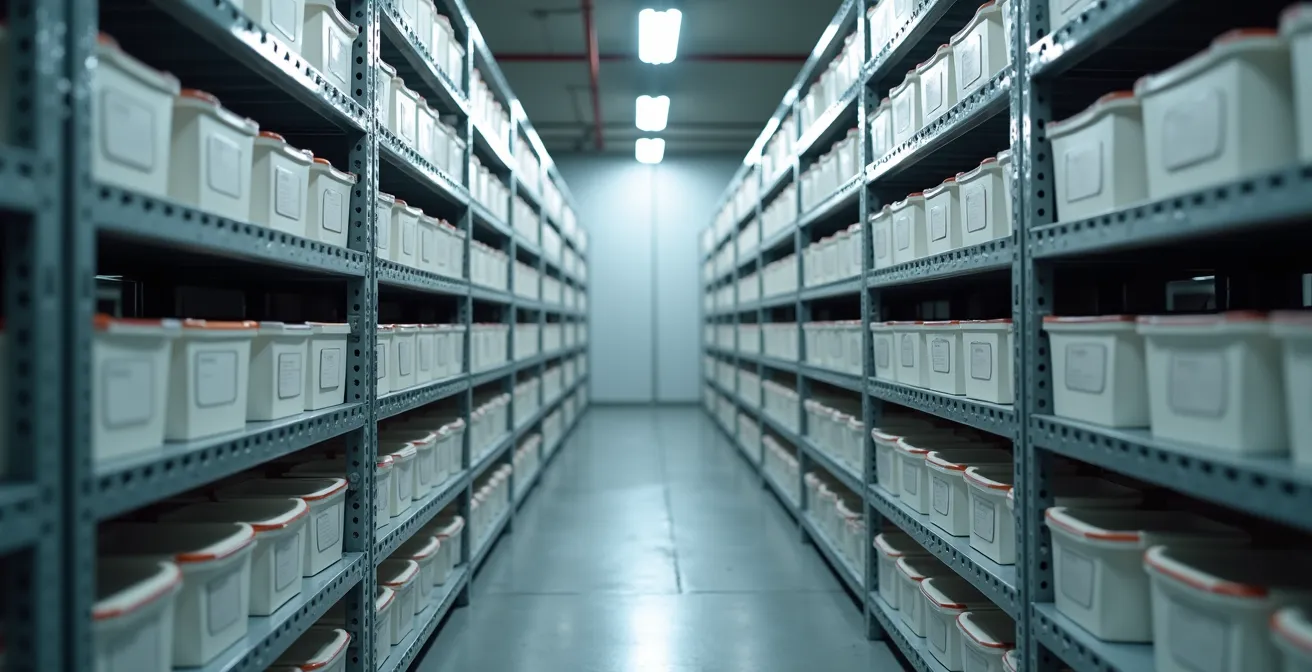
This system pairs exceptionally well with the “Purgatory Box” strategy. Professional organizers often advise clients to box up items they’re unsure about. Instead of forcing an immediate, emotionally charged decision, the box is stored for six months. Later, reviewing the digital list of contents allows for a more detached, rational decision about whether to keep or discard the items, often without ever reopening the box. This method has been shown to reduce decision fatigue by 40% and enable guilt-free disposal.
Open Shelving vs. Closed Cabinets: Which Is Better for Dust-Prone Collectibles?
The choice between open shelves and closed cabinets goes far beyond aesthetics; it’s a critical decision that directly impacts your brain’s processing capacity and stress levels. While open shelves are trendy and can display cherished items, they create constant visual stimuli. As the Nuvance Health Neuroscience Team explains, in a cluttered environment, “stimuli compete for neural representation in your visual cortex.” Each object on an open shelf is a piece of data your brain has to process, categorize, and filter out, contributing to a higher cognitive load and potential for visual overwhelm.
For dust-prone collectibles, this problem is amplified. Not only do the items create visual noise, but the visible layer of dust adds another layer of stress—a constant, visible reminder of a pending chore. Closed cabinets, on the other hand, create “visual silence.” By hiding the items, they remove them from your brain’s immediate processing queue. This simple act can significantly lower background cortisol levels because your mind is not being constantly taxed by the need to “curate” or “clean” what it sees. Glass-door cabinets offer a middle ground, allowing for intentional display while still providing a physical barrier that reduces both dust and the overwhelming sense of visual clutter.
The following table breaks down the cognitive and maintenance impacts of each choice, helping you make a decision that prioritizes your mental well-being.
| Factor | Open Shelving | Closed Cabinets | Glass-Door Cabinets |
|---|---|---|---|
| Visual Cortisol Response | High – constant visual stimuli | Low – items hidden | Moderate – controlled visibility |
| Maintenance Frequency | Weekly dusting required | Monthly cleaning | Bi-weekly exterior cleaning |
| Cognitive Load | High ‘curation energy’ | Minimal mental burden | Intentional display focus |
| Decision Fatigue Impact | Constant micro-decisions | Set-and-forget peace | Curated selection reduces choices |
When your environment is cluttered, your brain’s processing centers become overwhelmed by all the incoming signals… stimuli compete for neural representation in your visual cortex
– Nuvance Health Neuroscience Team, How clutter affects your brain health
The Anchoring Mistake That Puts Toddlers at Risk in Playrooms
In a home with young children, the stress of hidden clutter is compounded by a much more immediate anxiety: safety. An improperly anchored shelf or bookcase is a ticking time bomb, and that latent risk contributes to a caregiver’s elevated cortisol. It’s a persistent “What If?” scenario that runs in the background of your mind. Many parents believe that anchoring furniture is a simple, one-and-done task, but a common mistake can create a false sense of security and paradoxically increase stress.
This mistake is partial or improper anchoring. A wobbly shelf that hasn’t fallen creates more sustained anxiety than one that is either rock-solid or has already been dealt with. This instability becomes a source of chronic mental load for the caregiver. Furthermore, this situation can lead to “Risk Compensation,” a psychological phenomenon where feeling secure in one area (believing the shelf is “anchored enough”) leads to reduced vigilance in other safety measures, creating a net negative outcome. The solution is absolute security: ensuring furniture is anchored correctly to studs, with no wobble whatsoever, to permanently close this dangerous mental loop.
It’s also crucial to reframe our understanding of a child’s behavior. For a toddler, climbing a bookcase isn’t “misuse” or bad behavior; it is an innate, predictable developmental urge to explore their environment. Designing a playroom with this in mind—by choosing low, stable storage and ensuring every single piece of furniture is immovably anchored—isn’t just about preventing injury. It’s about creating a “yes space” where you, the parent, can relax your hyper-vigilance, knowing the environment is fundamentally safe. This frees up immense cognitive resources and lowers your stress baseline in the room you need it most.
When to Swap Your Wardrobe: The 2-Step System for Stress-Free Transitions
The seasonal wardrobe swap is a task many people dread. It’s not just the physical labor; it’s the emotional labor of making hundreds of micro-decisions at once. “Do I still like this? Will it fit next year? Is it out of style?” This concentrated dose of decision fatigue can be overwhelming. A stress-free system focuses on deferring these decisions until you have the emotional and mental bandwidth to handle them, effectively breaking one massive task into two manageable steps.
This system leverages Temporal Landmarks—fixed dates like the start of a new season—as psychological triggers to begin the process. The first step is purely mechanical: box up all off-season clothes in a “Purgatory Box” without making any keep-or-toss decisions. This immediately clears your closet and closes the mental loop of “I need to deal with those winter sweaters.” The emotional work is deferred. Step two occurs six months later when you retrieve the box. The time and emotional distance make decisions much easier. What seemed indispensable last winter might now be an obvious donation.
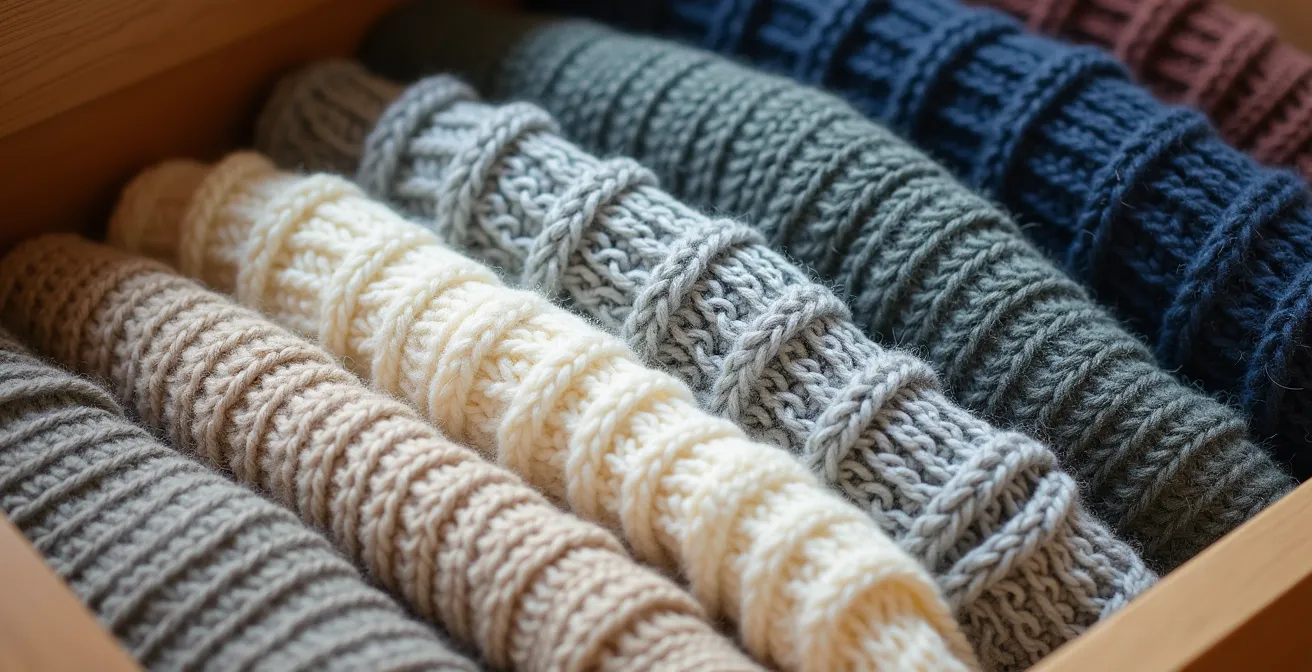
To further reduce friction, incorporate dedicated bins for clothes that are currently too small or too big, and keep a donation bag permanently in your closet. This turns decluttering from a monolithic annual event into a small, continuous habit. Every time you try something on that doesn’t fit or feel right, it goes directly into the appropriate bin or bag. This prevents the buildup of items that create guilt and clutter, maintaining a state of organizational equilibrium and reducing the scope of the next seasonal swap.
Open Storage vs. Hidden Storage: Which Is Better for ADHD Brains?
For individuals with ADHD, the home environment can be either a powerful ally or a significant obstacle. The concept of “out of sight, out of mind” is a literal, daily reality. This makes the debate between open and hidden storage critically important. As holistic psychiatrist Dr. Ellen Vora, MD, notes, “patients with ADHD start to function better in their lives when their home feels neat and organized, and they’re able to create systems for where they keep certain objects like phone, wallet, and keys.” The right system is not one-size-fits-all; it’s a hybrid approach that accommodates the unique wiring of the ADHD brain.
Completely hidden storage can be disastrous, as it removes the “Object Permanence Cues” necessary for daily functioning. If the keys aren’t visible, they effectively cease to exist, leading to frantic morning searches and increased stress. Therefore, for essential, everyday items, open storage—like a designated bowl by the door or clear containers—is vital. It keeps these items in the visual field, reducing the cognitive load of having to remember where they are.
Case Study: The Hybrid ‘Focus Cocoon’ System
Research by professional organizer Cassandra Aarssen with over 500,000 families revealed that ADHD brains thrive with a hybrid storage model. This system uses clear containers and doorless cabinets for frequently used items to provide necessary visual cues. Simultaneously, it uses targeted hidden storage (closed cabinets or opaque bins) for non-current tasks or less-used items. This creates a “focus cocoon” by reducing distracting visual clutter. This tailored approach was found to reduce the formation of overwhelming “Doom Boxes” (mixed-clutter containers) by 60% and significantly lowered the activation energy required to start tasks.
The goal is to strike a balance: visual cues for what’s relevant now, and visual silence for what isn’t. This strategic use of storage minimizes distractions, supports executive function, and creates an environment that feels supportive rather than chaotic, ultimately lowering the chronic stress associated with fighting against one’s own brain.
Hot Glue vs. E6000: Which Glue Won’t Peel Off Smooth Glass?
It may seem trivial, but even a micro-decision like choosing the right adhesive for a small repair or craft project can contribute to your overall mental load. The wrong choice creates a future problem—an item that falls apart, a repair that fails. This failure re-opens a mental loop you thought you had closed, adding to your background stress. Choosing an adhesive is not just a practical decision; it’s a vote for future peace of mind. The “Trust Factor” of your materials is a real, though often subconscious, component of a low-stress home.
Hot glue, for example, offers instant gratification. It’s fast and easy. However, on a smooth, non-porous surface like glass, its bond is weak. Subconsciously, you know it’s a temporary fix. This creates a low-level anxiety, a “worry of failure.” You can’t fully trust the repair, so the mental loop never truly closes. An industrial-strength adhesive like E6000, while requiring a much longer cure time (24-72 hours), creates a permanent, high-strength bond. The long wait is an investment in certainty.
This trade-off between speed and reliability is a powerful metaphor for managing home-related stress. The following comparison highlights how the “Trust Factor” of an adhesive directly impacts your mental load.
| Adhesive Type | Cure Time | Bond Strength | Trust Factor | Mental Load Impact |
|---|---|---|---|---|
| Hot Glue | 30-60 seconds | Moderate | Low – worry of failure | Creates background anxiety |
| E6000 | 24-72 hours | Industrial strength | High – set and forget | Closes mental loop permanently |
| Silicone | 24 hours | Flexible strong | Medium-high | Good for items with movement |
By consciously choosing the tool with the highest “Trust Factor” for the job, you are making a decision to permanently close a mental loop. You are eliminating a future point of failure and its associated stress. This “set and forget” peace of mind, even on a small scale, contributes to a calmer, more predictable home environment.
Key Takeaways
- The primary source of clutter stress is the ‘mental open loops’ created by unresolved items, even when they are hidden from view.
- Reducing ‘decision fatigue’ by using systems that defer or simplify choices is more effective for long-term stress reduction than simple tidying.
- Strategic storage choices—like closed cabinets or clearly labeled systems—create ‘visual silence,’ directly lowering cognitive load and cortisol levels.
How to Clean Velvet Upholstery Without Leaving Water Stains?
Owning beautiful things, like velvet upholstery, can sometimes be a source of stress in itself. The fear of ruining an expensive item can create significant anxiety, a phenomenon known as “Solution-Induced Damage.” You want to clean a small spot, but you’re paralyzed by the thought of making it worse with a water stain. This specific anxiety prevents you from maintaining your assets, allowing small problems to become larger, more stressful ones. The key to overcoming this is having a trusted, low-risk protocol that protects both the fabric and your peace of mind.
For a delicate material like velvet, the mantra is “less is more,” particularly concerning moisture. The first and most crucial step in any cleaning process is to test your method on an inconspicuous area. This simple action single-handedly diffuses the majority of the anxiety, as it contains the risk. For surface dirt and dust, dry brushing with a soft-bristled brush is often sufficient to lift particles and restore the pile without introducing any liquids.
When a stain requires more intervention, the goal is to use heat and minimal moisture. The proper technique involves the following steps:
- Test first: Always test your cleaning solution (even if it’s just water) in a hidden spot to prevent “Solution-Induced Damage” anxiety.
- Dry brush: Use a soft-bristled brush to lift surface dirt and revive the nap before applying any treatment.
- Steam, don’t soak: For deeper stains, a steamer or the steam from an iron held several inches away can deliver heat without oversaturating the fabric.
- Blot, never rub: Use a clean, dry cloth to blot the steamed area. Rubbing can crush the velvet’s pile and spread the stain.
- Prevent future stress: Once clean and dry, consider using a velvet-specific fabric protector spray. This is a form of proactive “Asset Protection” that makes future cleaning easier and less stressful.
This protocol transforms furniture maintenance from a high-stakes gamble into a predictable, manageable task. It’s a final, concrete example of how having the right system doesn’t just solve a physical problem—it permanently closes a mental loop of worry.
To begin reclaiming your mental space, start not with an entire room, but with a single, manageable ‘mental open loop’. Choose one strategy from this guide—whether it’s assigning a purpose to the space under your stairs or simply choosing a high-trust adhesive for a small repair—and apply it today. This small victory is the first step toward a calmer home and a quieter mind.