
Creative hobbies represent far more than simple pastimes—they’re powerful tools for self-expression, stress management, and transforming the spaces we inhabit. Whether you’re drawn to reshaping your living environment through thoughtful interior choices, building functional pieces with your own hands, or exploring artistic mediums that unlock emotional expression, these pursuits share a common thread: they allow you to actively shape your world rather than passively consume it.
The intersection of lifestyle choices and creative expression creates a uniquely personal approach to daily living. From understanding the psychology behind why certain design trends resonate with you, to mastering the technical skills needed to bring DIY visions to life, to developing organizational systems that support rather than stifle creativity, this comprehensive exploration connects the dots between practical home management and artistic fulfillment. Each element builds upon the others, creating a holistic framework for living more intentionally.
The concept of artistic flow state explains much of the therapeutic power behind creative pursuits. When you’re fully absorbed in mixing colors on a palette, arranging furniture to create the perfect focal point, or solving the spatial puzzle of a storage challenge, your brain enters a state where time seems to disappear and anxieties fade into the background. This neurological phenomenon isn’t just pleasant—it’s been linked to reduced cortisol levels and improved overall well-being.
Creative hobbies also build a unique form of confidence that translates beyond the specific skill. Successfully completing a DIY shelving project teaches problem-solving and perseverance. Curating artwork for vertical impact develops your aesthetic eye. Even tackling the psychological barriers to decluttering strengthens decision-making abilities. These aren’t isolated achievements—they’re transferable life skills disguised as leisure activities.
Understanding interior design begins not with trends, but with psychology. The appeal of fleeting design trends often stems from deeper emotional needs—a desire for renewal, connection to a community of like-minded enthusiasts, or the comfort of visual novelty in otherwise unchanging circumstances. Recognizing these underlying motivations helps you make choices that satisfy the real need rather than chasing every passing aesthetic.
Every successful room design centers around intentional focal points—the elements that naturally draw the eye and anchor the space. This might be a statement piece of furniture, a gallery wall carefully chosen for vertical impact, or even a window with exceptional natural light. The key is singularity: attempting to make everything a focal point creates visual chaos, while a well-defined primary element provides structure for all other decisions.
When choosing artwork specifically for vertical spaces, consider both scale and sight lines. A common mistake is selecting pieces too small for the wall height, leaving them floating in empty space. A practical rule: artwork or gallery arrangements should occupy roughly two-thirds to three-quarters of the available wall width for balanced visual weight.
Seasonal texture transitions offer an accessible entry point into interior styling without requiring major investment. Swapping heavy velvet cushions for linen in warmer months, or introducing wool throws as temperatures drop, creates subtle environmental cues that align your space with natural rhythms. This practice also extends the lifespan of textiles by reducing year-round wear.
Managing pet impact on refined decor requires strategic thinking rather than compromise. Washable slipcovers, furniture positioned to create pet-free zones, and designated pet areas with their own stylish accessories allow you to maintain aesthetic standards while accommodating animal companions. The solution isn’t choosing between pets and design—it’s planning for both from the outset.
The difference between a satisfying DIY project and a frustrating half-finished attempt often lies in the planning phase. Project time estimation proves particularly challenging for beginners, who typically underestimate by a factor of two to three. A realistic approach involves breaking projects into discrete tasks, researching each step individually, then adding a buffer for unexpected complications—because there will always be complications.
DIY modular solutions for tight budgets represent perhaps the most versatile approach to furnishing and organizing spaces. Modular pieces adapt as circumstances change—cube storage units can be stacked, separated, or reconfigured; simple wooden platforms can become beds, seating, or display surfaces depending on arrangement. This flexibility proves especially valuable when planning for future moves with adaptable pieces that work in various room configurations.
The initial material investment for beginners need not be extensive. Focus on acquiring versatile, quality tools rather than comprehensive collections:
Tool maintenance extends both lifespan and safety. Dull blades require excessive force, increasing accident risk. Rusty tools transfer stains to materials. Simple habits—wiping down metal surfaces after use, storing items in dry locations, occasionally lubricating moving parts—prevent most degradation. For hand tools, this maintenance takes mere minutes but adds years of functionality.
The structural integrity of DIY decor separates decorative pieces from functional furniture. Weight-bearing projects require understanding load distribution, appropriate fastener selection, and material limitations. A floating shelf might look clean and minimal, but inadequate wall anchors or insufficient thickness for the span will result in eventual sagging or catastrophic failure. When building anything that supports weight, over-engineering is safer than optimistic minimalism.
Finishing techniques often determine whether a project looks homemade or professionally crafted. The difference lies in patience—applying multiple thin coats of paint rather than one thick layer, sanding between applications, addressing drips immediately, and allowing proper curing time. These steps feel tedious in the moment but create dramatically superior results.
Effective storage solutions for rotating collections acknowledge a fundamental truth: not everything needs to be accessible simultaneously. Whether you’re managing seasonal decorations, craft supplies for different project types, or children’s toys appropriate for various developmental stages, the key is intentional rotation rather than constant access to everything.
Container rotation logic involves matching storage solutions to actual usage patterns. Items accessed weekly deserve prime, easy-reach locations. Monthly rotation items can occupy higher shelves or less convenient spaces. Seasonal items belong in deep storage with clear labeling systems. This hierarchy prevents the common scenario where everything mingles together, making retrieval of anything a frustrating excavation.
Establishing seasonal rotation workflows transforms what might feel overwhelming into manageable routine. Setting specific transition dates—perhaps aligned with traditional season changes or practical indicators like heating system adjustments—creates structure. A two-bin system where outgoing items are packed as incoming items are retrieved ensures nothing gets forgotten in limbo.
Time management for busy property owners requires rejecting the myth of marathon organization sessions. Instead, implement focused fifteen-minute interventions: one drawer, one shelf, one category. These brief sessions fit into actual schedules and provide psychological wins that build momentum, whereas blocked-off weekend days often get postponed indefinitely.
Psychological barriers to decluttering typically center on three core fears: waste (“I spent money on this”), potential future need (“I might use this someday”), and identity loss (“This represents who I was”). Addressing these requires reframing: the money is already spent regardless of whether you keep the item, “someday” often never arrives and meanwhile the item occupies valuable space, and past identity doesn’t require physical artifacts to remain valid. The goal isn’t ruthless minimalism but intentional curation of items that serve your current life.
Overcoming the blank page—whether literal canvas or metaphorical starting point—represents one of the most common creative obstacles. The paralysis stems from perfectionism, the fear that your first mark commits you to a specific direction. Professional artists understand that initial marks are exploratory, not binding. Permission to create “bad” art, experimental sketches, or practice pieces removes the pressure that blocks beginning.
Material investment for beginners should prioritize understanding mediums over accumulating supplies. A limited palette of quality paints teaches color mixing logic more effectively than dozens of pre-mixed hues. Working with constraints builds problem-solving skills and color theory knowledge that purchasing every option cannot provide.
Color mixing logic follows predictable principles. Primary colors (red, blue, yellow in traditional systems; cyan, magenta, yellow in modern color theory) combine to create secondaries. Understanding color temperature—warm yellows versus cool yellows, for instance—explains why some mixtures create vibrant oranges while others produce muddy browns. This isn’t mysterious; it’s systematic knowledge that improves with practice.
Creative upcycling and material repurposing represent the intersection of environmental consciousness and artistic problem-solving. Transforming outdated furniture with paint techniques, converting glass containers into storage solutions, or reimagining fabric scraps into patchwork projects exercises creative thinking while reducing consumption. The practice also builds resourcefulness—seeing potential in existing materials rather than defaulting to purchasing new supplies.
Preservation of artwork ensures your creative output remains stable over time. Factors affecting longevity include:
Memory preservation in the digital age presents both opportunities and challenges. Digital files offer perfect reproduction and easy sharing, but require active management—file format updates, multiple backup locations, and organizational systems that remain comprehensible years later. Physical preservation provides tangible connection but demands proper materials and storage conditions.
The chemistry of acid-free materials matters significantly for longevity. Standard wood-pulp paper contains lignin, which breaks down into acids that yellow pages and deteriorate photographs over time. Acid-free and lignin-free papers, while slightly more expensive initially, preserve memories for generations rather than decades. This consideration extends to adhesives, which should be archival quality to avoid staining or weakening.
Paper weight selection affects both functionality and presentation. Text-weight papers (20-24 lb) work for journaling integration and layering without excessive bulk. Medium cardstock (65-80 lb) provides structure for pages and mat backgrounds. Heavy cardstock (100+ lb) serves as album covers or bases for dimensional elements. Understanding these categories helps you select appropriate materials for specific applications.
Layout composition in scrapbooking follows design principles applicable across creative fields. The rule of thirds suggests placing focal elements off-center for dynamic interest. Visual weight distribution balances heavy elements (dark colors, dense patterns, dimensional objects) across the composition. White space provides visual rest and emphasizes featured components. These aren’t rigid rules but frameworks for creating cohesive, visually pleasing arrangements.
Interactive elements transform static memory keeping into engaging experiences. Flip-up sections reveal hidden journaling, pull-tabs extend timelines, pockets hold removable memorabilia, and layered acetate creates depth effects. These techniques invite physical interaction, making the review process more memorable and enjoyable than passive page-turning.
Journaling integration serves multiple functions: providing context future viewers will need, processing emotions around captured memories, and adding your authentic voice to visual documentation. The writing need not be extensive—even brief captions noting dates, locations, and feelings add significant value. Your future self will appreciate details that seem obvious now but fade surprisingly quickly from memory.
The beauty of lifestyle and creative hobbies lies in their interconnected nature—organization systems support artistic practice, DIY skills enable custom storage solutions, design knowledge informs creative projects, and all of it contributes to a more intentional, personally crafted daily existence. Starting anywhere in this ecosystem creates ripples that naturally expand into other areas, building both skills and confidence along the way.

The debate over digital photobooks versus physical scrapbooks completely misses the point of creating a lasting family legacy. Both physical albums (acid, light) and digital files (bit rot, obsolescence) are vulnerable to decay without active, ongoing preservation. The true value…
Read more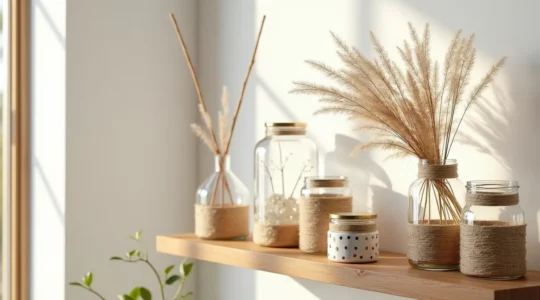
The secret to elevating upcycled jars from crafty clutter to designer decor isn’t about more ideas—it’s about adopting a professional’s execution-focused mindset. Success depends on mastering material science: choosing the right adhesive and preparing surfaces meticulously for a permanent, flawless…
Read more
Choosing between watercolor and acrylic for relaxation isn’t about which is ‘easier’; it’s about managing your relationship with control. Watercolor’s fluidity teaches “intentional surrender,” helping you accept and collaborate with beautiful, unplanned results. Acrylic’s opacity offers a “safe container,” allowing…
Read more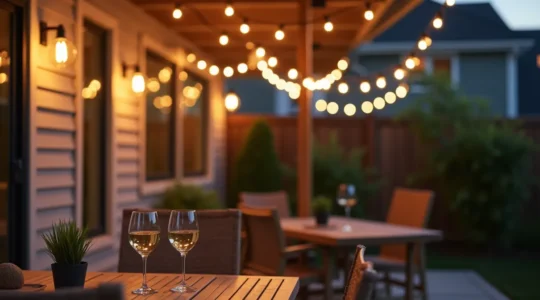
Hanging beautiful string lights without drilling is about more than just sticky hooks; it’s about designing a resilient, temporary lighting system. Choose the right non-drilling method (adhesive, mechanical, tension) based on weather, surface, and season. Plan for “serviceability” with features…
Read more
True garden automation isn’t about buying gadgets; it’s a system of one-time investments with compounding time-saving returns. Foundational choices like pavers over wood eliminate annual “maintenance debt.” Layered strategies, from robot mowers to strategic plantings, create a self-sustaining ecosystem that…
Read more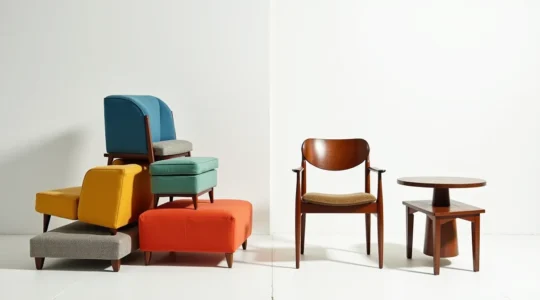
Chasing fleeting interior design trends is a psychological trap that quietly drains your wallet, costing far more than the initial price tag. The constant cycle of buying and replacing “fast decor” creates a hidden “trend tax” due to rapid depreciation…
Read more