
Your home is far more than four walls and a roof—it’s the physical manifestation of your daily routines, your comfort zone, and often your largest financial investment. Yet many homeowners feel overwhelmed by the sheer breadth of knowledge required to maintain, optimize, and personalize their living spaces effectively. From the underutilized corner in your living room to the backyard that floods every spring, each challenge represents an opportunity to create a more functional, beautiful, and valuable environment.
This comprehensive resource brings together the essential knowledge domains that every homeowner encounters: strategic interior design that makes small spaces feel expansive, outdoor landscaping principles that balance beauty with practicality, foundational woodworking skills for custom solutions, and sustainable maintenance practices that protect both your investment and the environment. Whether you’re setting up your first apartment or refining a long-established family home, understanding these interconnected aspects will empower you to make informed decisions that align with your lifestyle, budget, and long-term goals.
The modern home often demands that single spaces serve multiple functions simultaneously. A dining room becomes a home office by day, a guest bedroom doubles as a craft studio, and that awkward nook under the stairs remains frustratingly empty despite your intuition that it could serve a purpose.
The key to conquering spatial constraints lies in choosing furnishings that embrace flexibility rather than fighting against it. Adaptable furniture transforms your square footage from static to dynamic. Consider a console table that extends to seat eight dinner guests, or a sofa with storage compartments beneath the cushions. Wall-mounted desks that fold away when not in use create a complete workstation that literally disappears, preserving the aesthetic integrity of your living space while maintaining professional functionality.
When evaluating furniture for small urban environments, apply the “multiple roles” test: can this piece serve at least two distinct functions? Ottoman storage cubes can be seating, footrests, and hidden organization. Nesting tables provide surface area when needed but tuck away to free floor space. This approach isn’t about compromise—it’s about intentional design that respects both your spatial and functional needs.
Every home harbors underutilized zones that most people walk past daily without recognition. The vertical wall space above doorways, the eighteen inches between your refrigerator and the wall, the landing on your staircase—these “dead spaces” represent untapped storage and display opportunities. Shallow shelving in narrow hallways creates a gallery wall effect while housing books or collectibles. The cavity above kitchen cabinets can accommodate baskets for seasonal items. Corner spaces, often the most challenging to utilize, respond beautifully to custom solutions like lazy susans, diagonal shelving units, or triangular cabinets.
Lighting fundamentally alters how spaces feel and function, yet many homes rely on a single overhead fixture per room. Zoned lighting creates layers of illumination that serve different purposes throughout the day. Task lighting focuses brightness where activities demand it—under-cabinet strips for food preparation, adjustable desk lamps for detailed work, vanity lights for grooming. Ambient lighting establishes the room’s overall mood through ceiling fixtures or wall sconces. Accent lighting draws attention to architectural features or artwork, adding depth and visual interest.
Consider a living room: overhead recessed lights provide general visibility, a floor lamp next to the reading chair offers focused illumination, and LED strips behind the television reduce eye strain while creating ambiance. Each zone operates independently, allowing you to calibrate the lighting to match the activity and time of day. This approach also delivers energy efficiency, as you illuminate only what you’re actively using rather than flooding entire rooms with unnecessary light.
Your property’s exterior faces relentless challenges that interior spaces never encounter: temperature extremes, precipitation, UV radiation, invasive organisms, and structural loads that shift with the seasons. Successful outdoor design balances aesthetic appeal with practical durability, creating spaces that enhance your property value while requiring manageable maintenance.
Landscape design exists on a spectrum between two poles: hardscaping (permanent structural elements like patios, retaining walls, and pathways) and softscaping (living elements including plants, soil, and mulch). Finding the optimal balance depends on your climate, maintenance capacity, and intended use. A family that entertains frequently might allocate seventy percent to hardscaping—creating generous patio space, outdoor kitchen areas, and defined pathways—with thirty percent to softscaping for visual interest and privacy screening.
Conversely, a gardening enthusiast might reverse that ratio, dedicating most square footage to planted beds with minimal structural intervention. The common mistake is underestimating hardscaping’s role in managing water flow, preventing erosion, and defining functional zones. Even a predominantly green landscape benefits from strategic hardscaping that directs drainage, creates level entertaining areas, and establishes clear circulation patterns.
Outdoor materials endure conditions that would destroy interior finishes within months. Natural stone, while beautiful and long-lasting, requires specific maintenance protocols to prevent staining, efflorescence (white salt deposits), and surface degradation. Sealing frequency depends on porosity—dense granite might need attention every few years, while porous limestone demands annual treatment. Understanding your material’s characteristics prevents costly mistakes: never use acidic cleaners on limestone or marble, always test sealers on inconspicuous areas first, and address stains immediately before they penetrate deeply.
Wood furniture and structures face additional challenges from moisture cycling, UV exposure, and temperature fluctuations. Wind resistance becomes critical for outdoor furniture, particularly in exposed locations. Heavier materials like cast aluminum or weighted resin provide stability, while lighter options require secure anchoring or storage during severe weather. The investment in weather-resistant cushion storage or quick-dry foam pays dividends in longevity and reduced replacement costs.
Mature trees can add thousands to property value through curb appeal, energy savings from strategic shade, and neighborhood character. However, those same trees pose risks when their root systems encounter foundations, underground utilities, or hardscaping. Tree roots seek moisture and nutrients, often infiltrating irrigation lines or creating pressure against foundation walls. Prevention strategies include installing root barriers during planting, maintaining adequate soil moisture to discourage roots from seeking water near structures, and selecting appropriate species for available space. A tree that reaches sixty feet at maturity requires proportional root space—planting too close to structures creates inevitable conflicts.
Equally important is awareness of invasive species risks. What appears as an attractive, fast-growing ornamental plant might become an ecological nightmare that outcompetes native vegetation, destabilizes soil, or creates maintenance burdens. Before introducing any new plant species, verify its behavior in your region through local extension services or native plant societies. The short-term appeal of vigorous growth rarely compensates for the long-term battle against an invasive species that spreads beyond your property boundaries.
Creating custom wooden pieces for your home offers unique satisfaction—the furniture fits your exact specifications, reflects your aesthetic preferences, and often costs significantly less than commercial equivalents. However, successful woodworking requires understanding fundamental material behaviors and techniques that distinguish amateur projects from professional-quality results.
Wood is hygroscopic, meaning it continuously absorbs and releases moisture in response to environmental humidity. This creates wood movement—dimensional changes across the grain that can measure several millimeters in a wide panel. A solid wood tabletop expands during humid summer months and contracts in dry winter conditions. Ignoring this behavior leads to cracked panels, failed joints, and warped assemblies.
Proper construction accommodates movement through design choices: breadboard ends on table tops attach with elongated holes that allow the main panel to expand and contract, frame-and-panel doors feature a floating panel that moves within grooves, and wide solid-wood shelving receives support that doesn’t restrict lateral movement. Plywood and engineered wood products move minimally because their cross-grain lamination cancels directional expansion, making them ideal for applications requiring dimensional stability.
Many beginners assume that more sanding automatically produces better results, creating smooth surfaces through sheer persistence. In reality, sanding efficiency depends on systematic progression through grit sequences and understanding when to stop. Starting with excessively coarse grit removes material quickly but creates deep scratches that require extensive work to eliminate. Beginning too fine means spending unnecessary time on minor stock removal.
The optimal approach assesses the starting surface condition, then progresses through grits systematically: perhaps 80-grit to remove mill marks and shape irregularities, 120-grit to eliminate 80-grit scratches, 180-grit for general smoothing, and 220-grit for final preparation before finishing. Each grit completely removes the scratch pattern from the previous grit. Skipping grits or jumping too quickly creates a surface that appears smooth initially but reveals hidden scratches when finish is applied, as the liquid accentuates defects invisible on bare wood.
A finish serves dual purposes: enhancing wood’s natural beauty while protecting it from moisture, stains, scratches, and UV damage. Finish durability varies dramatically based on chemistry and application. Oil-based polyurethane creates a hard, protective film ideal for high-traffic surfaces like dining tables and floors, though it adds an amber tone and requires careful application to avoid brush marks. Water-based polyurethane dries clear and fast but demands more coats to achieve comparable protection.
Penetrating oils like tung or linseed oil enhance grain figure beautifully and simplify repair—damaged areas can be spot-treated without refinishing entire surfaces. However, they provide minimal moisture or scratch resistance, making them better suited to decorative pieces than functional surfaces. Understanding your project’s exposure to wear, moisture, and UV radiation guides finish selection, with higher-risk applications demanding more robust protection systems.
Sustainability in home management extends beyond environmental consciousness—it represents a strategic approach to reducing operating costs, extending material lifespan, and minimizing waste. These practices typically deliver immediate financial returns while contributing to broader ecological goals.
Water flow restriction devices reduce consumption without noticeably affecting user experience. Modern low-flow showerheads maintain pressure sensation through air injection while using significantly less water. Faucet aerators cost just a few dollars but can reduce flow by thirty to fifty percent. These simple retrofits pay for themselves within months through reduced water and water-heating costs.
Insulation ROI (return on investment) varies by climate and existing conditions, but addressing the most significant thermal bridges typically delivers payback within several years. Attic insulation often provides the strongest returns, as heat naturally rises and un-insulated or under-insulated attics represent massive energy loss. Air sealing around penetrations—where pipes, wires, and ducts pass through walls—often delivers better returns than adding insulation to already-adequate walls, as air movement carries far more thermal energy than conduction through solid materials.
Preventing material degradation costs dramatically less than replacement. Regular cleaning prevents dirt accumulation that acts as an abrasive, wearing finishes and fibers. Addressing minor damage immediately—tightening a loose chair joint, touching up scratched finishes, replacing worn weatherstripping—prevents small issues from cascading into major failures. Understanding material-specific vulnerabilities guides maintenance priorities: leather benefits from periodic conditioning, natural fiber rugs require rotation to equalize wear, and appliance seals need regular inspection to maintain efficiency.
Sustainable laundry routines balance cleanliness with conservation. Washing full loads maximizes water and energy efficiency per item cleaned. Cold water washing preserves colors and fabrics while eliminating heating costs, with modern detergents formulated to perform effectively at low temperatures. Air drying, whether on outdoor lines or indoor racks, eliminates dryer energy use entirely while extending garment lifespan—the dryer’s tumbling and heat accelerate fiber breakdown and shrinkage.
For those embracing second-hand shopping, proper hygiene protocols ensure safety and comfort. Washable textiles and clothing should undergo hot water washing or dry cleaning before use. Hard goods benefit from thorough cleaning with appropriate solutions—wood furniture with wood cleaner, upholstery with fabric-safe products. Inspection for bed bugs (look for tiny dark spots, shed skins, or live insects in seams and crevices) protects your home from costly infestations. These precautions allow confident integration of pre-owned items that deliver character and value while diverting useful goods from landfills.
The gap between luxury design inspiration and realistic budgets frustrates many homeowners. However, understanding what creates perceived quality allows strategic replication of high-end aesthetics without proportional investment. This approach, often termed “dupes” (duplicates), focuses on capturing the essential visual and functional characteristics of premium items through alternative materials, manufacturing methods, or sourcing strategies.
Successful aesthetic replication requires analysis: what specific elements make that designer piece appealing? Often it’s proportion, color palette, texture, or a particular detail rather than the entire object. A expensive pendant light might be replicable through similar shape and finish in a budget-friendly material. High-end upholstery fabric’s appeal might come from texture and color rather than fiber content—a polyester velvet can deliver comparable visual impact to silk velvet at a fraction of the cost.
Key strategies include:
Temporary installation techniques allow experimentation without permanent commitment or damage. Removable wallpaper transforms spaces with trending patterns that can be changed seasonally. Peel-and-stick tile provides backsplash updates in rentals. Tension rods create room divisions or hanging systems without wall penetrations. These approaches serve renters unable to make permanent modifications, homeowners testing design directions before committing, and anyone who values flexibility over permanence.
Your home evolves continuously—as your family grows, your work changes, and your preferences develop. The knowledge domains covered here provide a foundation for making informed decisions about the spaces you inhabit. From optimizing awkward corners to selecting outdoor materials that withstand decades of weather, from crafting custom wooden pieces to implementing sustainable routines, each choice contributes to creating an environment that truly serves your needs. Start with the aspects most relevant to your current challenges, apply the principles systematically, and watch as your living space transforms into a more functional, beautiful, and valuable asset.
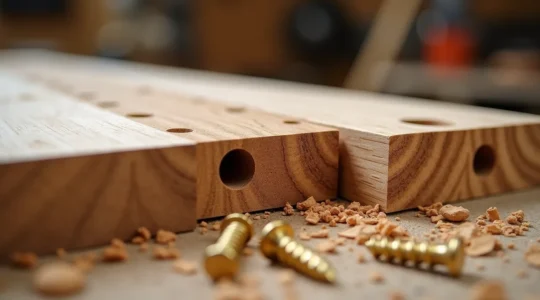
The true strength of a beginner’s table joint is not its breaking point in a lab, but its ability to resist the side-to-side racking forces of daily use that cause wobbling. Pocket holes provide excellent clamping pressure, pulling pieces together…
Read more
The secret to a high-end “faux-ceramic” finish isn’t the paint recipe—it’s mastering surface prep, structural additions, and professional styling principles. Proper adhesion is non-negotiable; sanding glass and choosing the right glue (like E6000 or epoxy) is the first step to…
Read more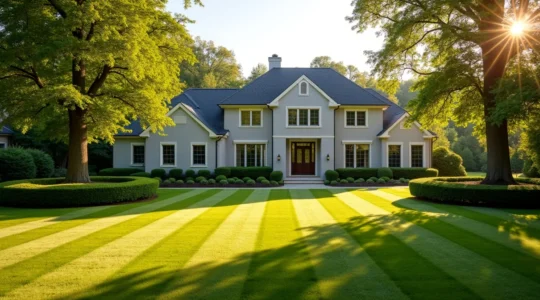
Maximizing your home’s appraisal value isn’t about expensive additions; it’s about systematically eliminating hidden landscaping liabilities first. An appraiser’s primary concern is risk, meaning issues like poor drainage or destructive tree roots can negate the value of aesthetic upgrades. Strategic…
Read more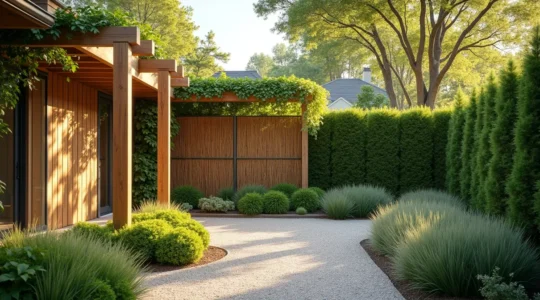
Contrary to popular belief, achieving backyard privacy isn’t about building higher fences; it’s about mastering spatial perception and sensory design. Key principles include managing sightlines with curved paths and creating “destination zones” that intentionally draw the eye. Effective design also…
Read more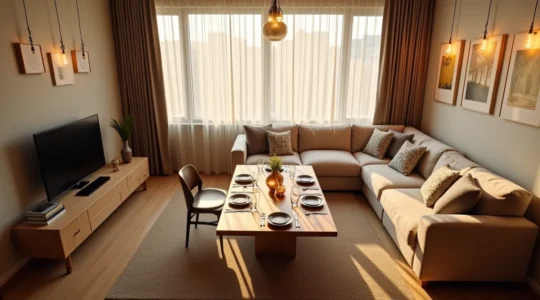
Hosting a large dinner party in a small space isn’t about compromise; it’s about treating your home as a reconfigurable architectural system. Static furniture is the enemy of social space. Modular, kinetic pieces create “spatial elasticity,” allowing a room’s function…
Read more